If you follow skincare trends, you may have seen recent discussions asking if Bakuchiol is endangered. It is a concern that has circulated on social media, causing many conscious consumers to pause and question the environmental impact of their routine.
At Krī, we welcome these questions. We believe that caring for your skin shouldn't come at the cost of the planet. Today, we want to look at the raw data together to provide reassurance on the sustainability of Bakuchiol, using the highest global standard for conservation science.
Understanding the Concern
Bakuchiol is extracted from the seeds of the Psoralea corylifolia plant, historically used in traditional Ayurveda and Chinese medicine.
The concern that this plant is endangered often stems from older regional reports. In specific areas where the plant was historically wild-harvested, local populations have indeed faced pressure. However, these regional issues do not necessarily reflect the status of the global species.
Furthermore, scientific naming conventions can make the data difficult to navigate. While the beauty industry knows it as Psoralea corylifolia, the scientific community often classifies it under the synonym Cullen corylifolium.
The Official Conservation Status
When checking the conservation status of a species, the global standard is the IUCN Red List of Threatened Species. This database assesses the health of plant and animal populations worldwide.
According to the official IUCN assessment for Cullen corylifolium, the plant is classified as Least Concern (LC).
What does "Least Concern" mean? This is the most positive classification a species can have in terms of population health. It indicates that the plant is:
-
Widespread: it grows abundantly across large geographical areas (including India, Pakistan, China, Sri Lanka, and Arabia).
-
Stable: the global population is not currently approaching the thresholds for "Vulnerable" or "Endangered" status.
-
Resilient: it is technically a "ruderal" species - a hardy plant that thrives in various soil conditions and grows rapidly.
The Krī Approach
While the species is not endangered, we believe responsible sourcing is still vital. The sustainability of an ingredient often relies on how it is obtained.
The ecological pressure mentioned in older reports usually links to "wild harvesting" -foraging plants from their native habitat. We opt for a more sustainable path.
We use cultivated sources
The Bakuchiol used in our formulations is derived from cultivated crops. These are plants grown specifically for harvest in a controlled agricultural setting. This method ensures that:
-
No pressure is placed on wild ecosystems.
-
The supply chain is transparent and traceable.
-
Farmers are supported through sustainable agriculture.
Focus on Purity
Sustainability also extends to safety and efficacy. We use a 99% pure, monomolecular Bakuchiol extract. We explicitly avoid crude "Babchi oil," which can contain phytotoxic compounds (psoralens) that may cause skin sensitivity. By using a highly purified isolate, we ensure you receive the clinical benefits of the molecule without the risks of unrefined plant matter.
Is Bakuchiol sustainable? Yes.
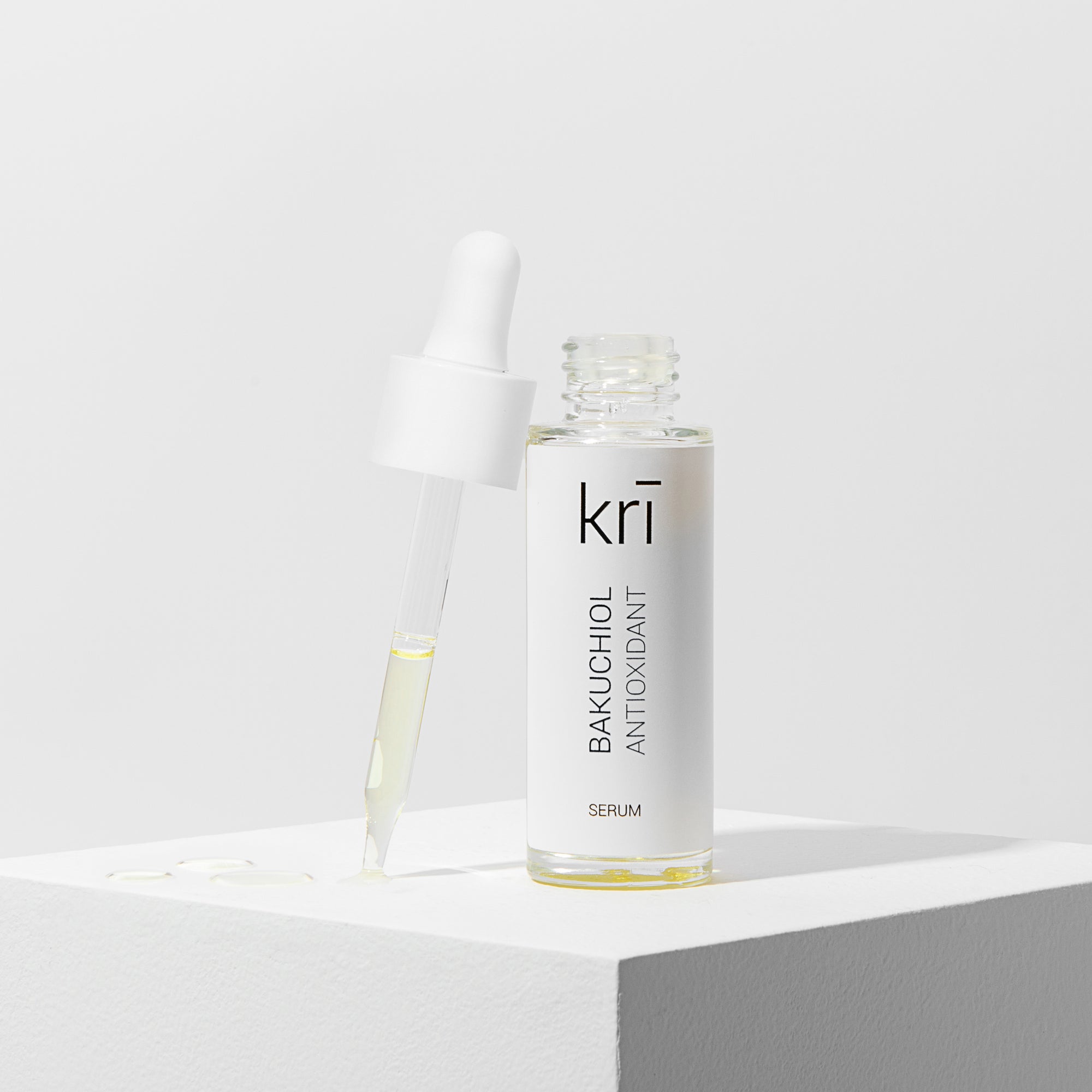
The classification of the plant as "Least Concern" confirms that the species is not endangered globally. When you choose products that use responsible, cultivated Bakuchiol - like our Bakuchiol Antioxidant Serum - you are choosing a renewable and effective ingredient that respects both your skin barrier and the planet’s biodiversity.