Vitamin C is one of the most widely used antioxidants in skincare, but there is still some confusion about how often it should be applied. Is daily use necessary? Could it be too much for sensitive skin? And does the type of vitamin C make a difference?
For most people, a well-formulated vitamin C product can be used every day. The more useful questions are which form of vitamin C you are using, how your skin responds to the formula, and whether it fits comfortably into the rest of your routine.
What does vitamin C do for your skin?
Vitamin C is an antioxidant. It helps neutralise free radicals, which are unstable molecules generated through normal biological processes and by environmental factors such as UV exposure and pollution. Oxidative stress can contribute to visible changes in the skin over time.
Vitamin C also plays a role in collagen synthesis and can help improve the appearance of uneven skin tone and dullness. These benefits make it relevant to a wide range of skincare goals, rather than just one particular age group or skin type.
However, the evidence for vitamin C depends on the form used, its concentration, the overall formulation and the outcomes being measured. Not every vitamin C serum will behave in exactly the same way.
Can you use vitamin C every day?
Yes. Daily application is generally appropriate if your skin tolerates the product. There is no requirement to take regular breaks from vitamin C simply because it is an active ingredient.
Consistency matters more than applying as much as possible. A small amount used regularly is usually a more practical approach than layering several antioxidant products at once. If you are introducing a new serum, start gradually and observe how your skin responds before making it a daily step.
If you experience persistent stinging, redness or discomfort, reduce the frequency or stop using the product. A skincare routine should support your skin, not leave it feeling repeatedly irritated.
Does the form of vitamin C matter?
When people talk about vitamin C serums, they are often referring to L-ascorbic acid. It is a well-studied form of vitamin C, but it can be challenging to formulate and is commonly used in acidic, water-based products. Some people find those formulations uncomfortable, particularly if their skin is already sensitive.
Other forms of vitamin C have different formulation requirements. Tetrahexyldecyl ascorbate (THDA), for example, is oil-soluble and can be incorporated into an anhydrous, or water-free, serum. Unlike L-ascorbic acid, it does not depend on a low-pH water-based environment in the same way.
That does not mean one form is universally better than another. It means that the experience of using a vitamin C product, including its texture and tolerability, depends on more than the words “vitamin C” on the label.
Is it better to apply vitamin C in the morning or evening?
Either can work. Many people prefer vitamin C in the morning because antioxidants can complement a daytime routine. They are not, however, a substitute for sunscreen.
If you apply vitamin C in the morning, finish your routine with broad-spectrum sun protection. You can also use a suitable vitamin C serum in the evening if that fits your routine better.
Can vitamin C be combined with other ingredients?
Vitamin C can sit alongside familiar skincare ingredients, including niacinamide and moisturising ingredients such as glycerin and squalane. There is no general rule that vitamin C and niacinamide must be kept in separate routines.
What matters is how the complete routine feels on your skin. Introducing multiple new products simultaneously makes it harder to identify the cause if irritation develops, so a gradual approach is sensible.
How does Krī approach vitamin C?
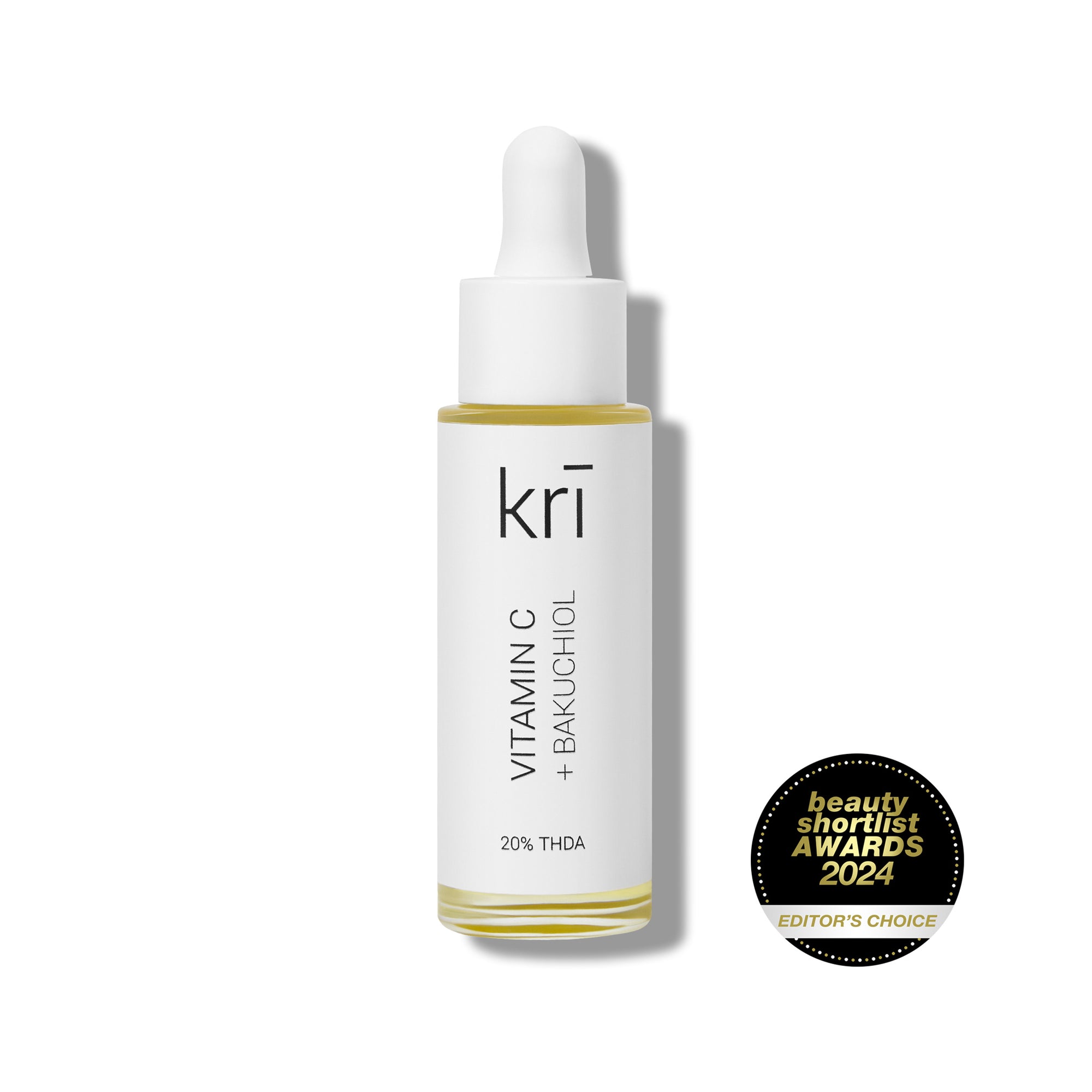
Our Vitamin C + Bakuchiol Serum uses tetrahexyldecyl ascorbate in a water-free blend with bakuchiol, broccoli seed oil and Kalahari melon seed oil. It has a light, silky oil texture and is designed to fit into a straightforward skincare routine.
Bakuchiol is included for its own antioxidant properties. We do not regard it simply as a replacement for retinol; it is an ingredient with a distinct evidence base.
Apply the serum after any water-based products and before or alongside your moisturising step, according to what feels comfortable on your skin. In the morning, follow with sunscreen.
The bottom line
You can use vitamin C every day, provided the formulation suits your skin. Choose a product you enjoy using, introduce it at a comfortable pace and keep the rest of your routine uncomplicated. Daily consistency is more valuable than an unnecessarily elaborate collection of actives.