Yes. Vitamin C and niacinamide can be used together.
The idea that these two popular skincare ingredients are incompatible has circulated online for years, often accompanied by warnings that using them together will make one or both ingredients ineffective or cause skin irritation.
Fortunately, this advice is largely based on outdated interpretations of research and doesn't reflect modern skincare formulations.
In fact, Vitamin C and niacinamide can complement each other particularly well. Both are antioxidants, but they bring different benefits to a skincare routine, making the combination useful for anyone concerned with dullness, uneven pigmentation and visible signs of ageing.
Why were we told not to mix Vitamin C and niacinamide?
The advice has its roots in older research involving forms of the ingredients under experimental conditions that aren't representative of the way modern skincare products are formulated or used.
One concern was that niacinamide could convert into nicotinic acid in the presence of Vitamin C, potentially causing flushing and irritation. Another was that combining the ingredients could reduce the effectiveness of Vitamin C.
These ideas have persisted remarkably well online, despite having little relevance to the way most contemporary skincare products are formulated and stored.
Modern formulations control factors such as pH, concentration and stability carefully. More importantly, not every Vitamin C product contains the same form of Vitamin C.
This distinction matters.
Not all Vitamin C is L-ascorbic acid
When people talk about whether Vitamin C can be combined with another skincare ingredient, they are often talking specifically about L-ascorbic acid.
L-ascorbic acid is the traditional water-soluble form of Vitamin C used in skincare. It generally requires an acidic formulation to remain effective and penetrate the skin, which is one reason some Vitamin C serums have a relatively low pH.
But Vitamin C comes in several forms.
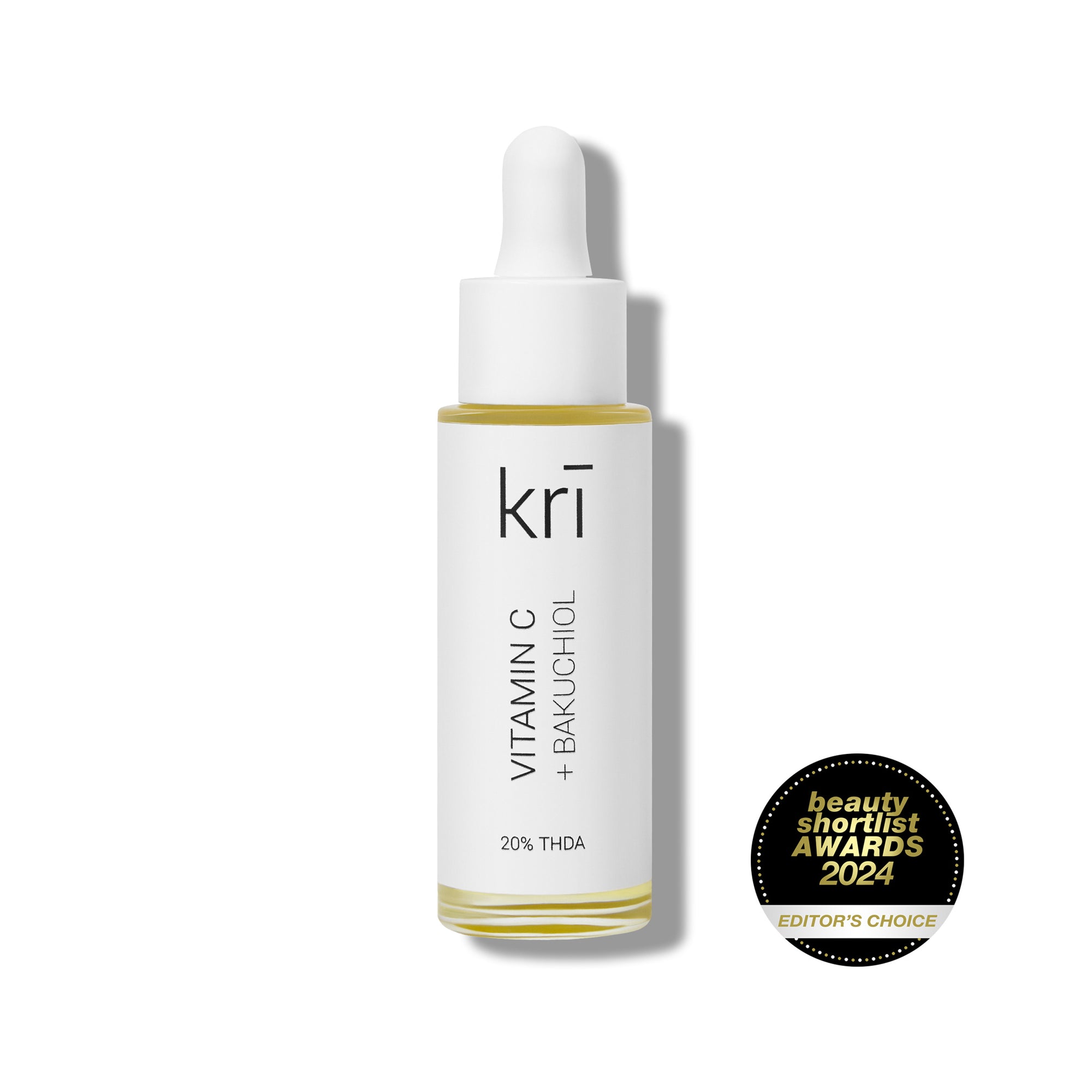
At Krī, we use Tetrahexyldecyl Ascorbate, usually shortened to THDA. It is an oil-soluble form of Vitamin C and does not depend on the low-pH environment associated with traditional L-ascorbic acid serums.
Our Vitamin C + Bakuchiol Serum is completely water-free, so the traditional concerns around combining a low-pH, water-based Vitamin C serum with niacinamide simply don't apply to our formula.
Why use Vitamin C and niacinamide together?
Although there is some overlap between the two ingredients, they have different strengths.
Vitamin C is an important antioxidant and is particularly valued in skincare for brighter, more even-looking skin. It also plays a role in collagen synthesis, making it relevant to routines focused on visible signs of ageing.
Niacinamide, a form of vitamin B3, is similarly versatile. Research has investigated its benefits for skin barrier function, uneven pigmentation, texture, fine lines and wrinkles.
Used within the same routine, they allow you to address several common skin concerns without needing an unnecessarily complicated collection of products.
What about mature skin?
Vitamin C and niacinamide make a particularly useful pairing for mature skin.
As skin ages, changes in texture, pigmentation, hydration and firmness can become more noticeable. Rather than trying to address each concern with a separate product, choosing versatile ingredients can keep a routine relatively simple.
Vitamin C provides antioxidant care while supporting brighter, more even-looking skin and collagen synthesis. Niacinamide can help support the skin barrier while improving the appearance of uneven tone, texture and visible signs of ageing.
Neither ingredient needs to do everything. Their value lies partly in the fact that they can perform different but complementary roles within the same routine.
Which should you apply first?
If you're using separate products, the formulation matters more than the ingredient name.
As a general rule, water-based serums should be applied before oil-based products.
For example, Krī's Illume Niacinamide Serum is water-based, while our Vitamin C + Bakuchiol Serum is oil-based. If using both in the same routine, apply Illume first and allow it to absorb before applying Vitamin C + Bakuchiol.
Follow with your moisturiser and, during the day, broad-spectrum sunscreen.
There is no need to leave a long interval between the two products or wait for one ingredient to become “inactive” before applying the other.
Can you use Vitamin C and niacinamide every day?
For most people, both ingredients can be incorporated into a regular skincare routine.
You don't necessarily have to use them together, however. If you prefer an even simpler routine, you could use Vitamin C in the morning and niacinamide in the evening.
The important thing is consistency rather than trying to fit as many active ingredients as possible into a single application.
If you have particularly sensitive skin or are introducing either ingredient for the first time, introduce products gradually so you can see how your skin responds.
What about Vitamin C, Niacinamide and Bakuchiol?
These ingredients can also form part of the same routine.
Our Vitamin C serum already combines THDA with Bakuchiol, giving you complementary antioxidant care in a single formula. Illume can then be used beforehand when you want the additional benefits of niacinamide.
That doesn't mean everyone needs all three ingredients.
If your priority is brighter, more even-looking skin and antioxidant care, Vitamin C + Bakuchiol may be sufficient. If you also want to focus on barrier support, texture and the broader benefits of niacinamide, adding Illume can make sense.
Good skincare isn't about using every effective ingredient. It's about choosing the ones that address what you actually want from your routine.
So, can Vitamin C and niacinamide be used together?
Yes. There is no general rule that says Vitamin C and niacinamide shouldn't be combined. The idea that the two ingredients cancel each other out is based largely on outdated information that doesn't reflect modern skincare formulations.
They can actually make a very useful pairing, particularly for skin concerned with dullness, uneven tone, pigmentation, texture and visible signs of ageing.
And if you're using Krī products, layering them is straightforward: Illume Niacinamide Serum first, followed by Vitamin C + Bakuchiol Serum, then moisturiser and sunscreen during the day.